

A park with a village in it
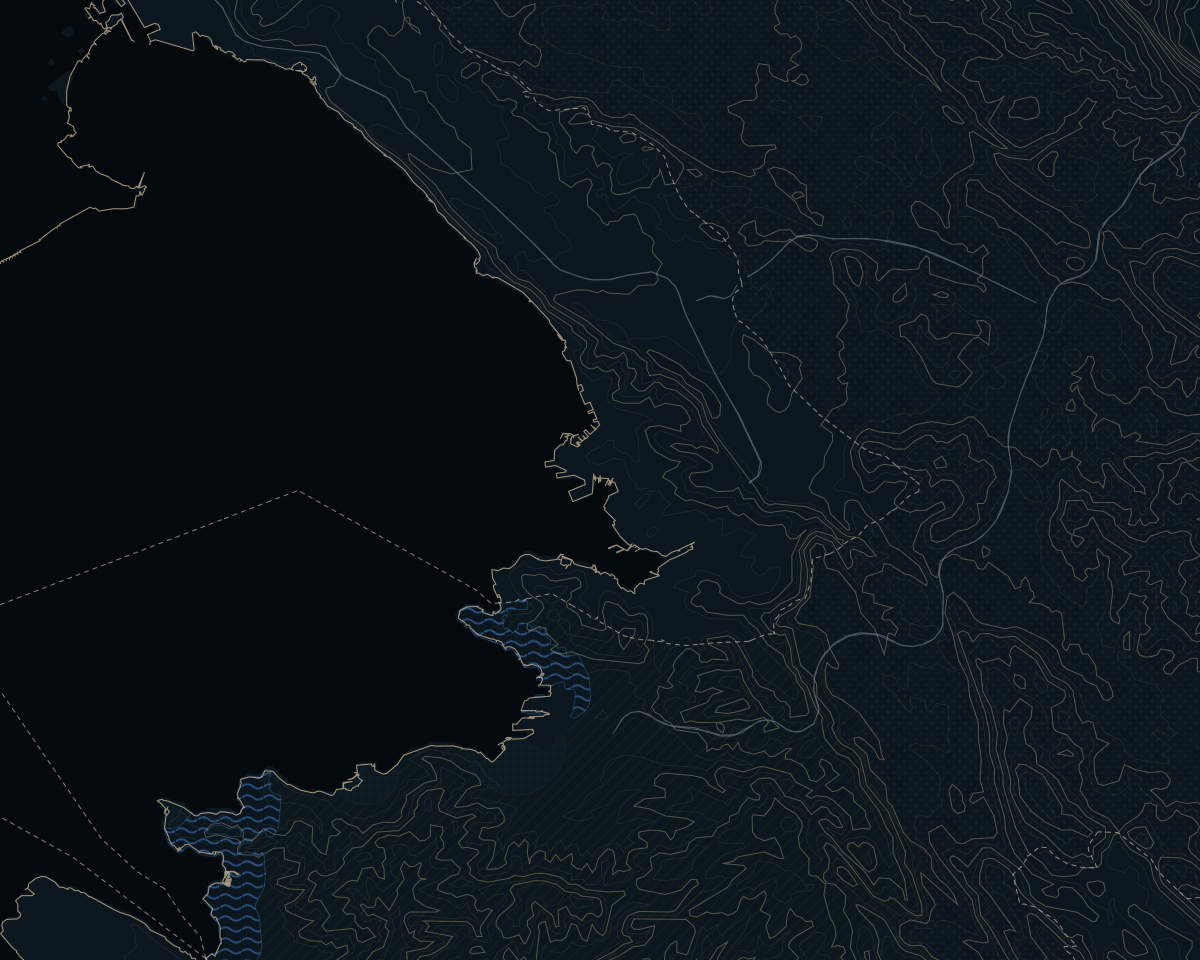
Between Izola and Portorož the built-up coast of Slovenian Istria pauses. The road drops into a valley that opens onto a small bay, and the bay, the cliff and the salt pans around it lie inside the Strunjan Landscape Park, founded in 1990 by the municipalities of Izola and Piran; a government decree of 2004 set its boundaries and protection rules. The village itself belongs to Piran, and both its names, Strunjan and Strugnano, are official.
Three things make the place:
- The cliff. A wall of flysch up to eighty metres high which, together with the strip of sea below it, is a nature reserve. According to the park it is the longest stretch of untouched coastline between Grado and Savudrija, the two points that close the Gulf of Trieste. It retreats by about a centimetre a year and has local rockfalls: its foot is not a place to sit.
- The salt pans. The Piran statutes of 1274 already regulated them. Salt is still made with the traditional petola method and gathered by hand with wooden tools from June to mid-September; the park describes them as the northernmost salt pans in the Mediterranean.
- The Stjuža lagoon, also inside the park.
Above Moon Bay (Mesečev zaliv) stand the church of the Apparition and its monastery: tradition says the Virgin appeared to vineyard guards on the night of the Assumption in 1512. The park also notes that the strawberry tree and myrtle grow wild here further north than anywhere else on the Adriatic.
In summer the beaches and the spa set the pace, and in July and August a free minibus serves the bay. Outside the season the village is quiet; it keeps its own artichoke days and persimmon festival.

.jpg)
.jpg)